No longer on the market
This property is no longer on the market

 Floorplan
 Map
Map6 bedroom detached house
Detached house
6 beds
5 baths
2575
Key information
Features and description
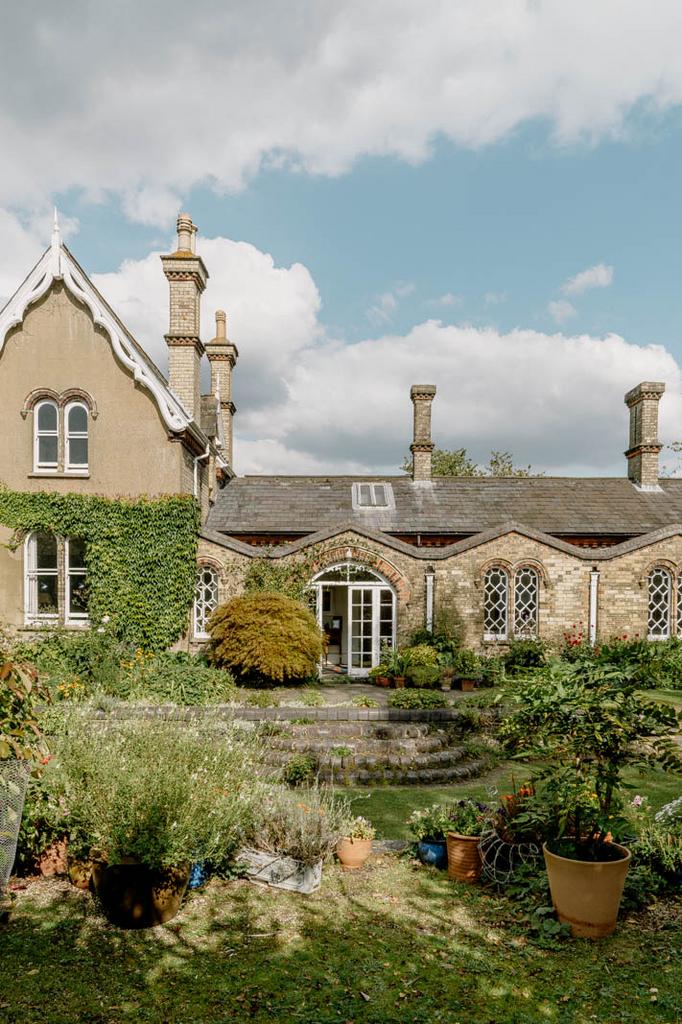
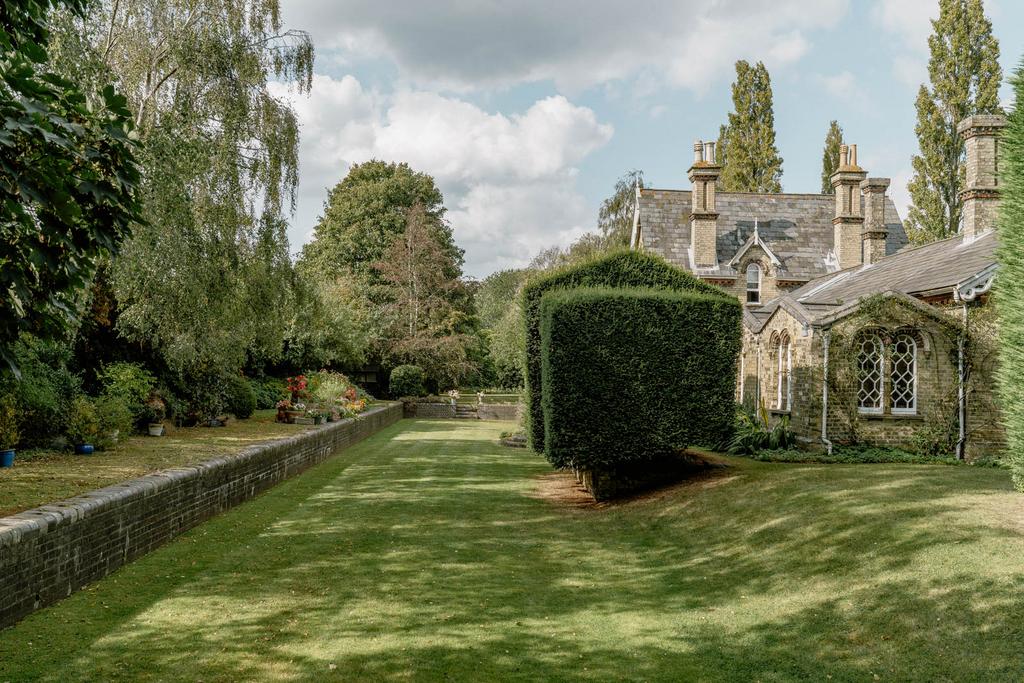
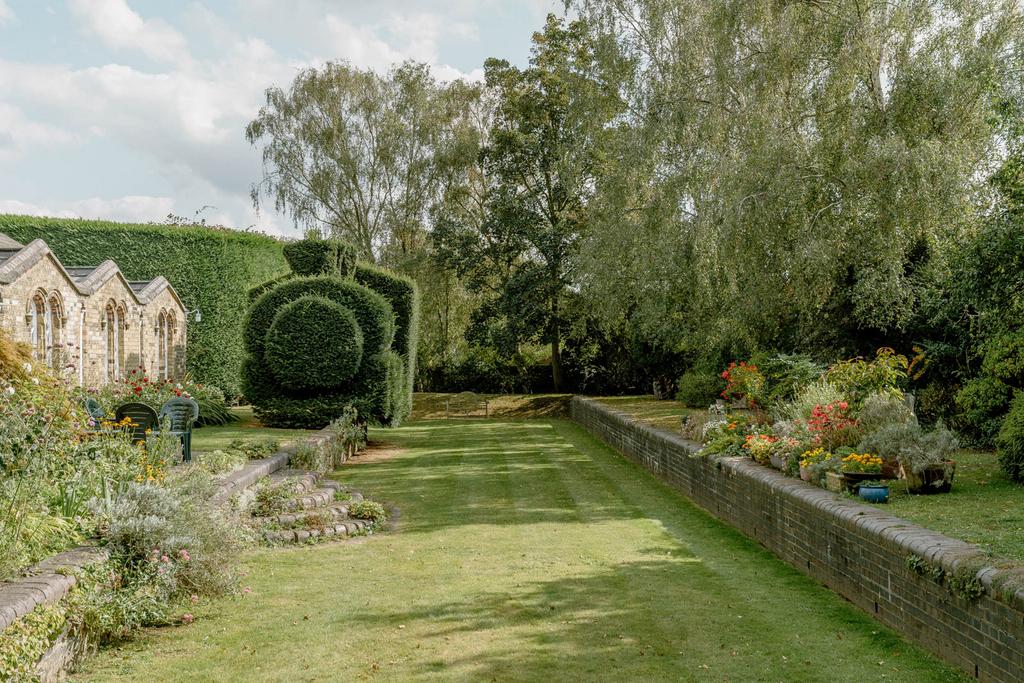
This wonderful, early Victorian Grade II-listed house was once one of the railway stations on the Midland Line in Bedfordshire, which opened in 1857. The rear garden is still arranged around the original platforms, and the house is complete with its own—now converted—railway toad. With a large, separate two-bedroom annexe, a tennis court and a lovely garden and wildflower meadow which extend to around two acres, the house is uniquely picturesque, only furthered by the beautiful surrounding countryside. It is also fantastically situated for connection to London, with trains from nearby Biggleswade Station taking around 36 minutes to reach London St Pancras via Thameslink services.
Setting the Scene
The original station was designed by Charles Driver, a significant British architect of the Victorian period. He pioneered the use of ornamental ironwork, examples of which can be seen in this house's ceiling. The station was built and opened in the mid-1850s and was one of his earliest commissions.
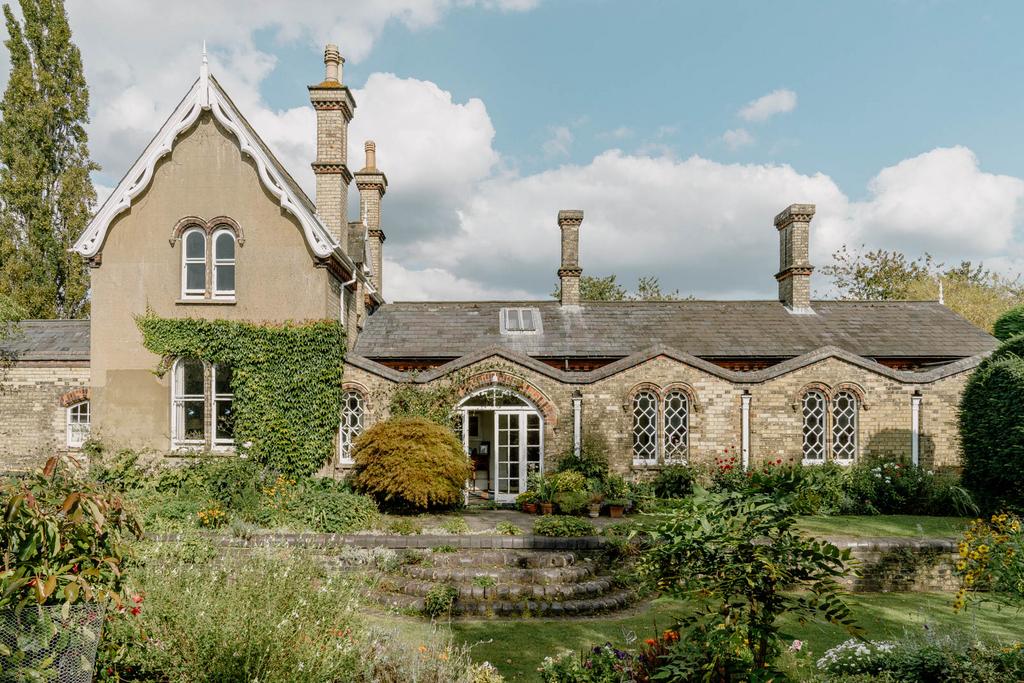
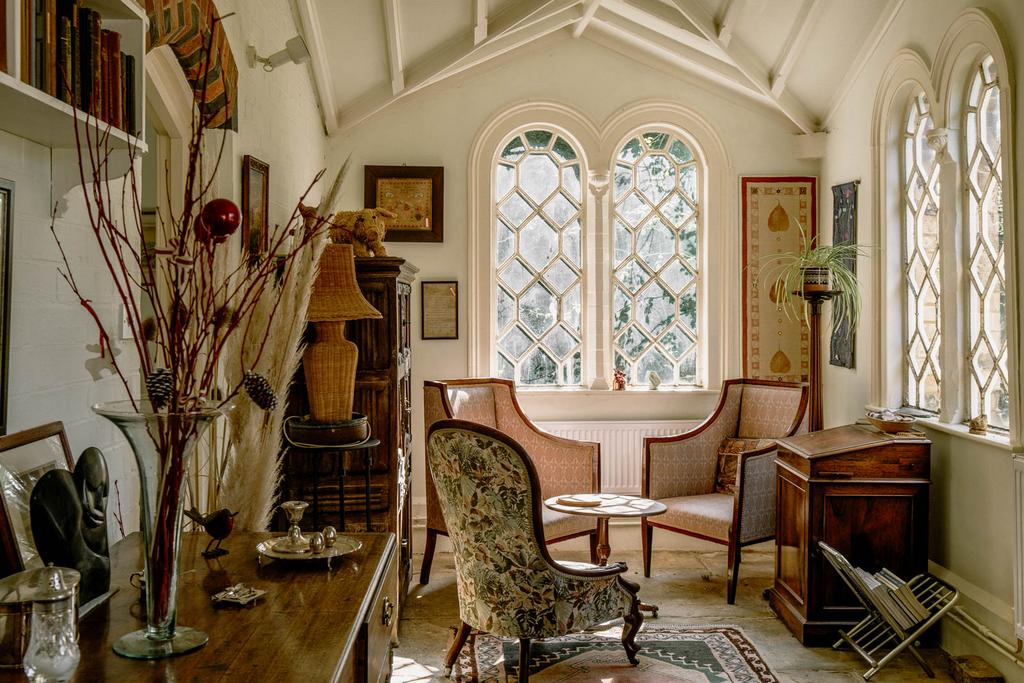
Built with yellow brick, polychrome brick dressings, and slate roofs, the building is handsome with some exceptional original features both inside and out. Most windows are paired with round-headed lights, sitting in cast iron casements with decorative geometric designs. Outside there are also elegant pierced, wavy-edged bargeboards, and a variety of chimney stacks, all with moulded cornices.
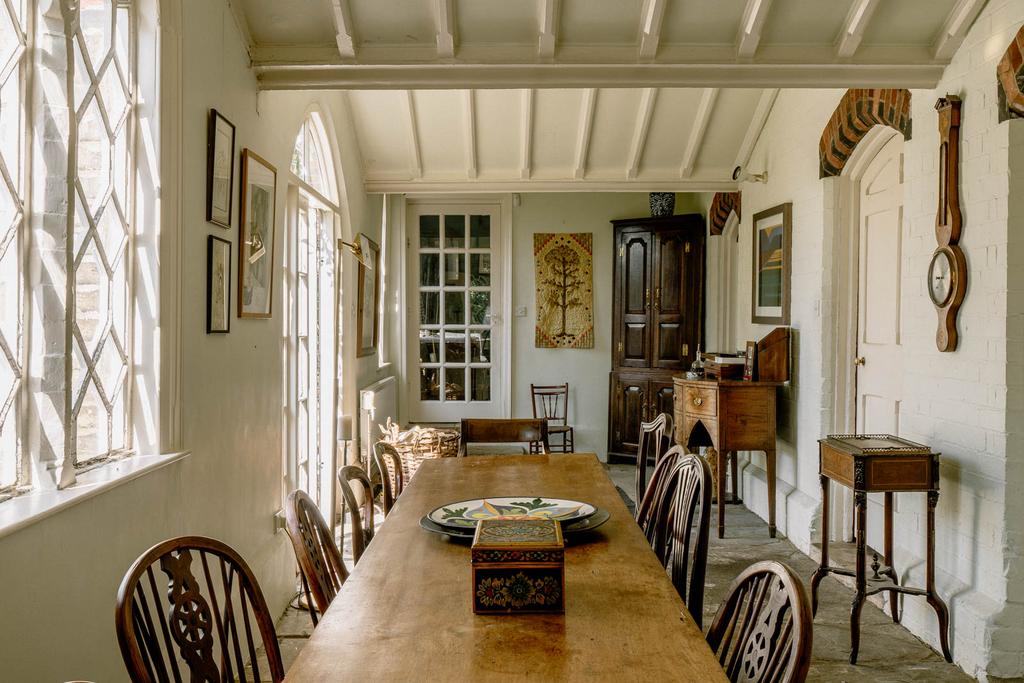
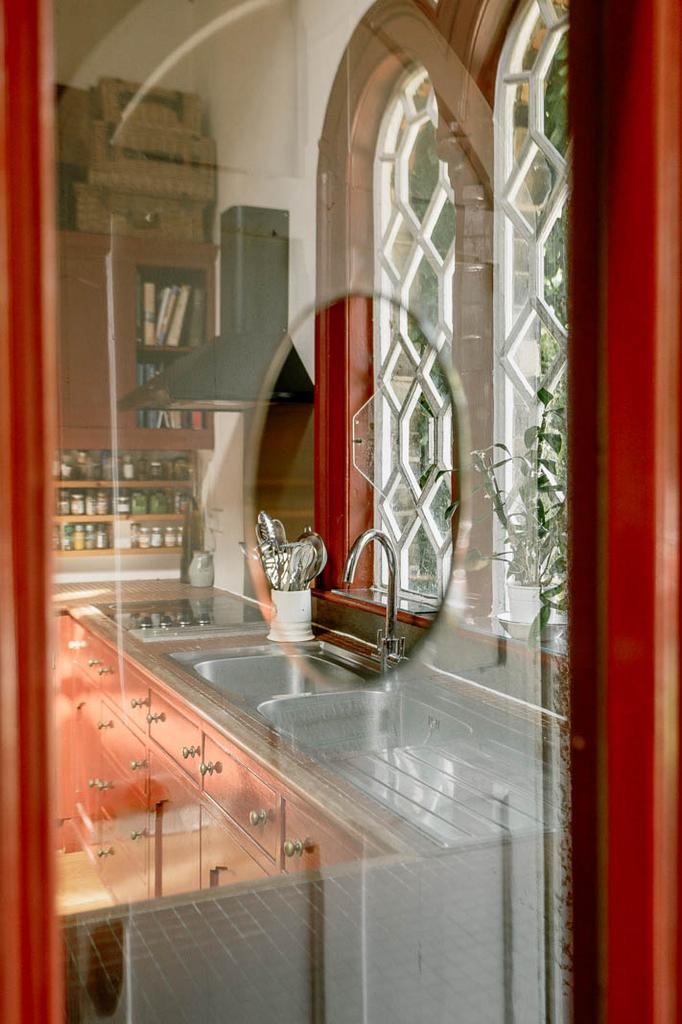
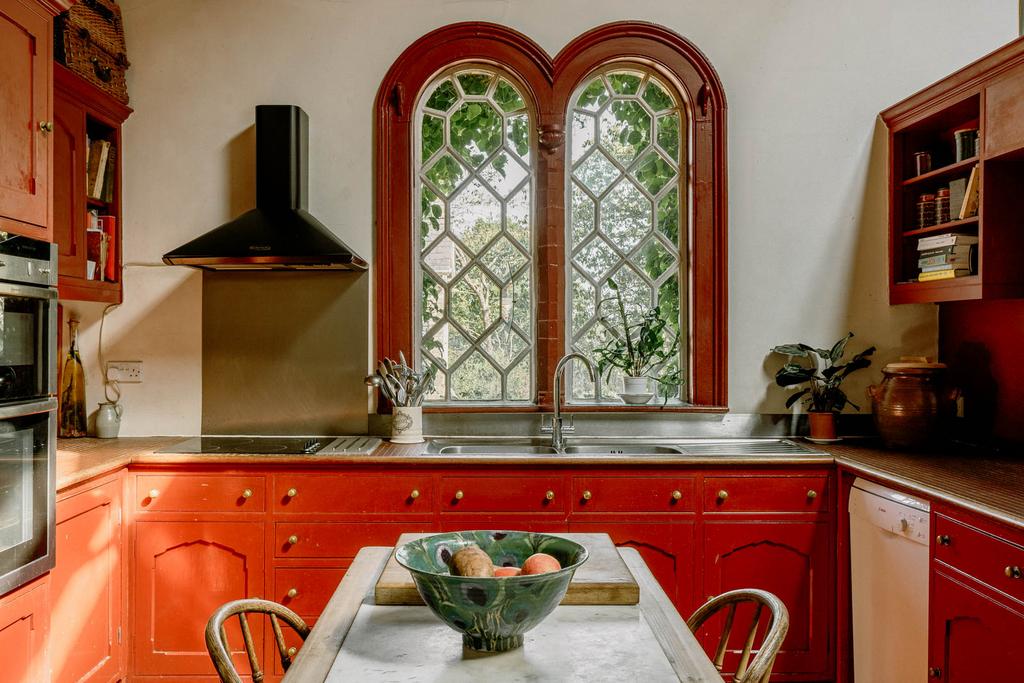
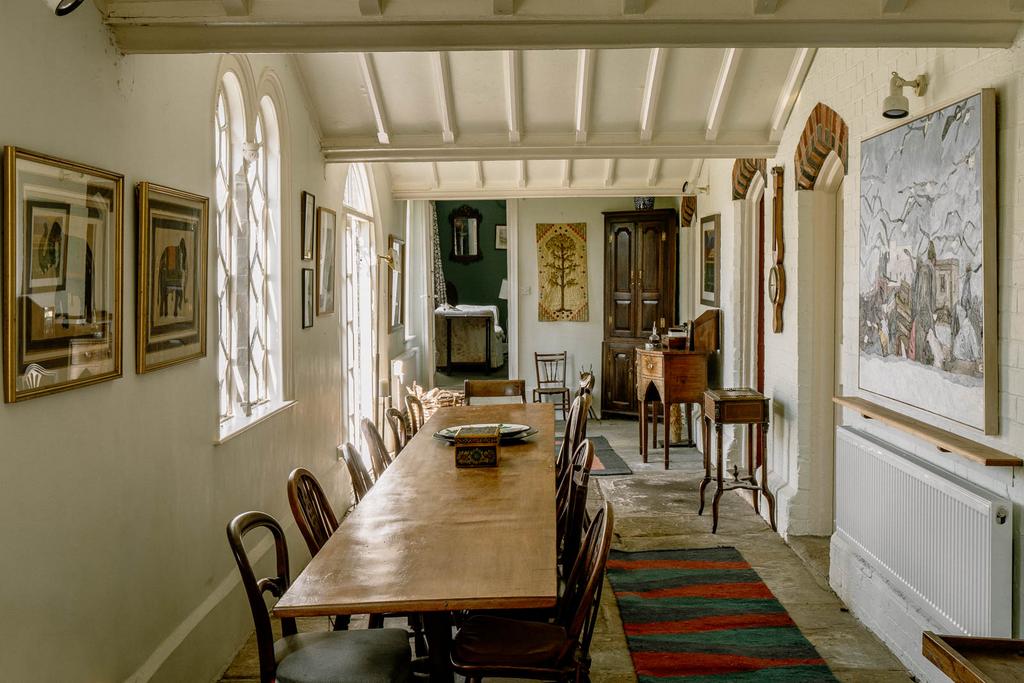
Although now in need of modernisation, the work that has been done during its most recent ownership has been sympathetic to the original design. Purchased in 1973, the station was barely habitable until it was thoughtfully converted into a warm and bustling family home. Carefully preserved original features remain: the original glass window to the ticket office remains, now in the bespoke shaker-style kitchen, and the former waiting room now functions as a refined long dining room, with the solid mahogany original ticket counter still in situ. For more information, please see the History section.
The Grand Tour
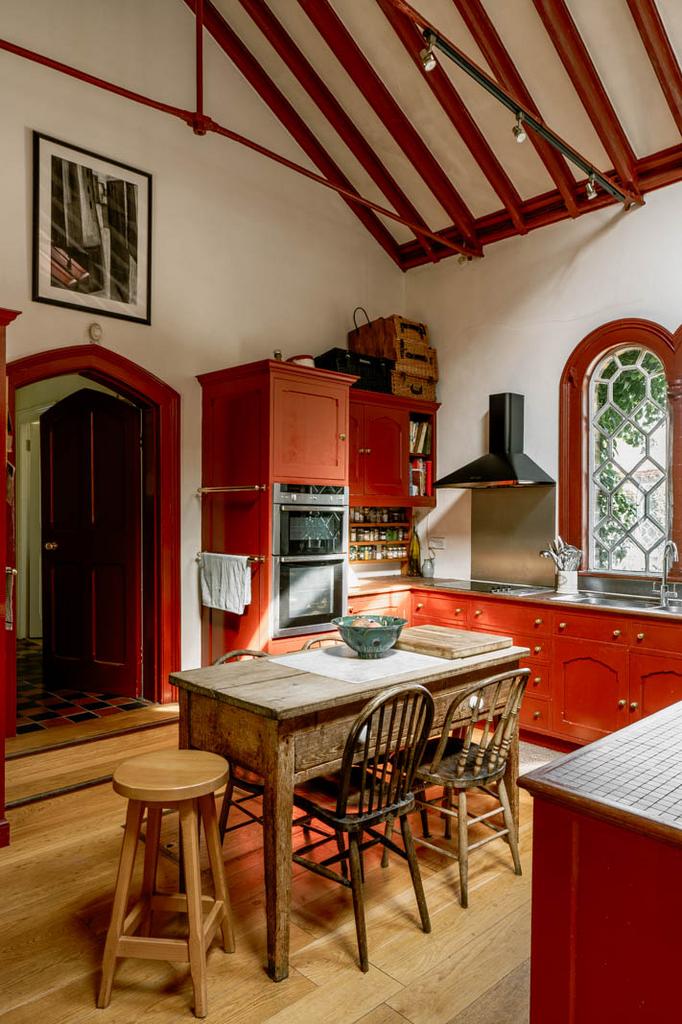
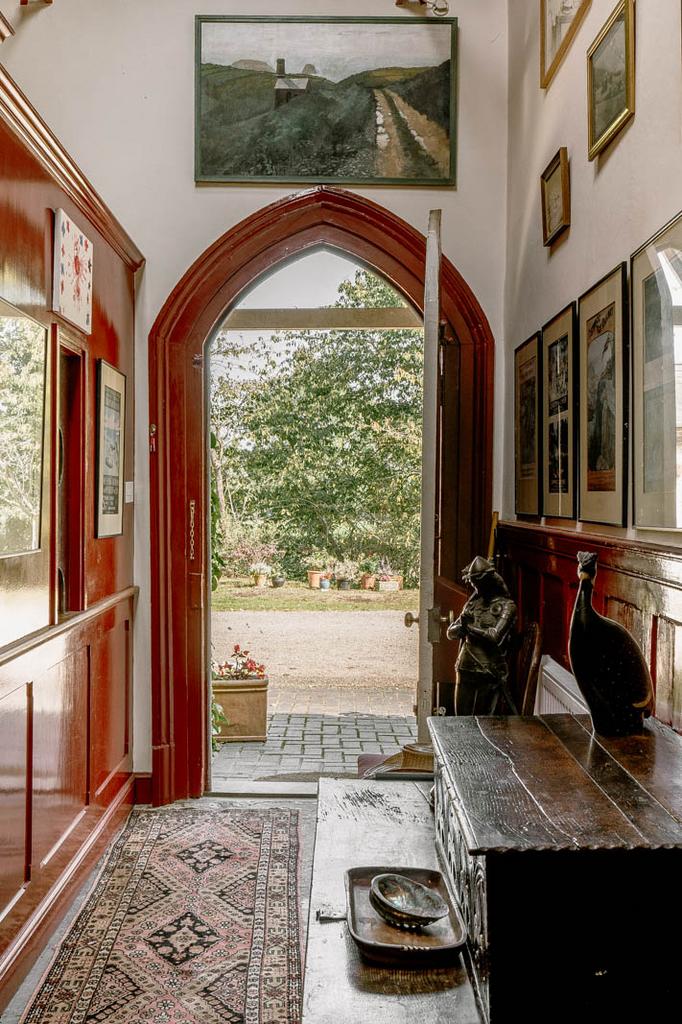
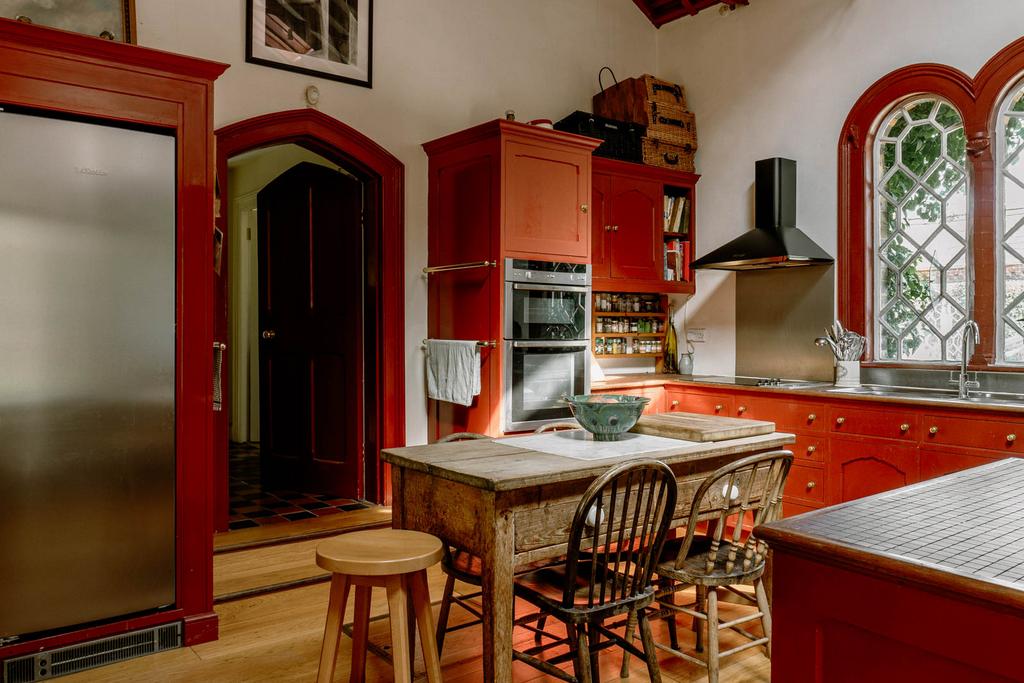
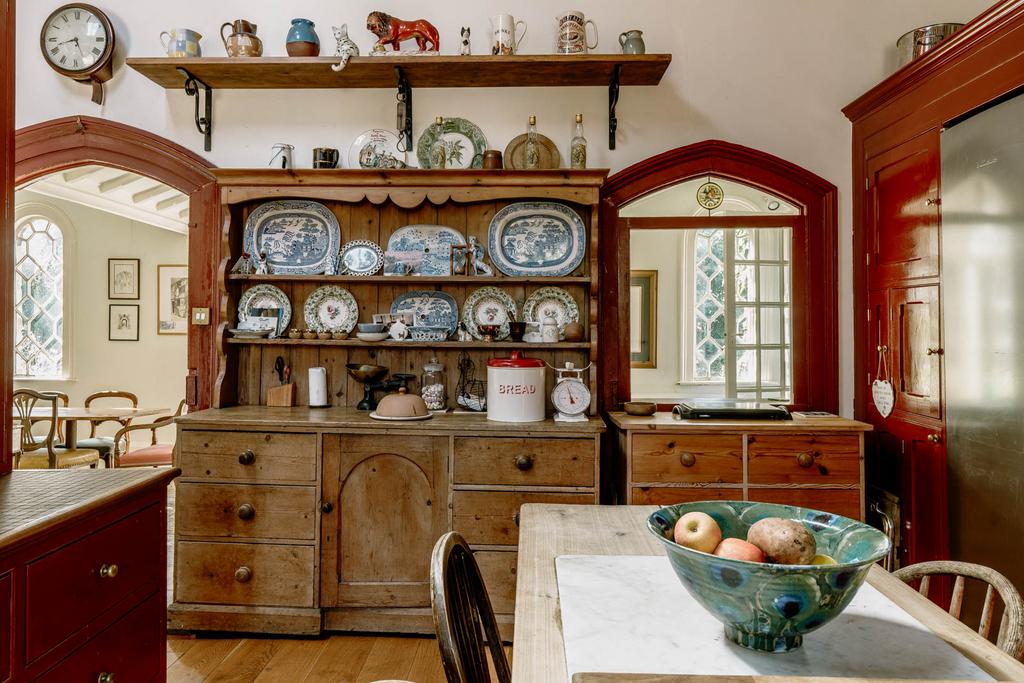
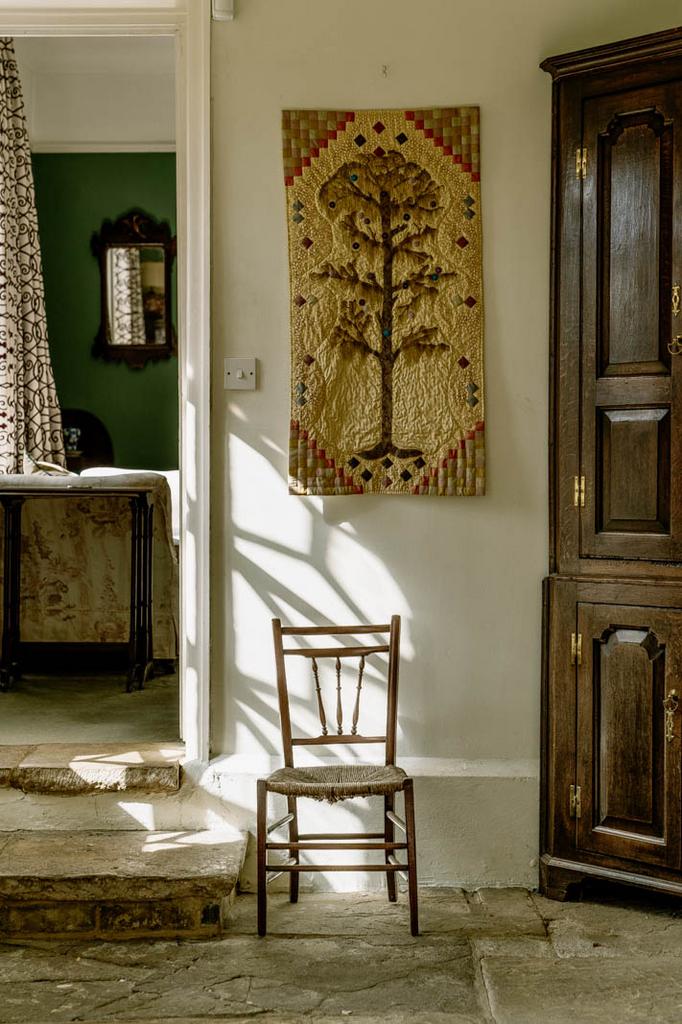
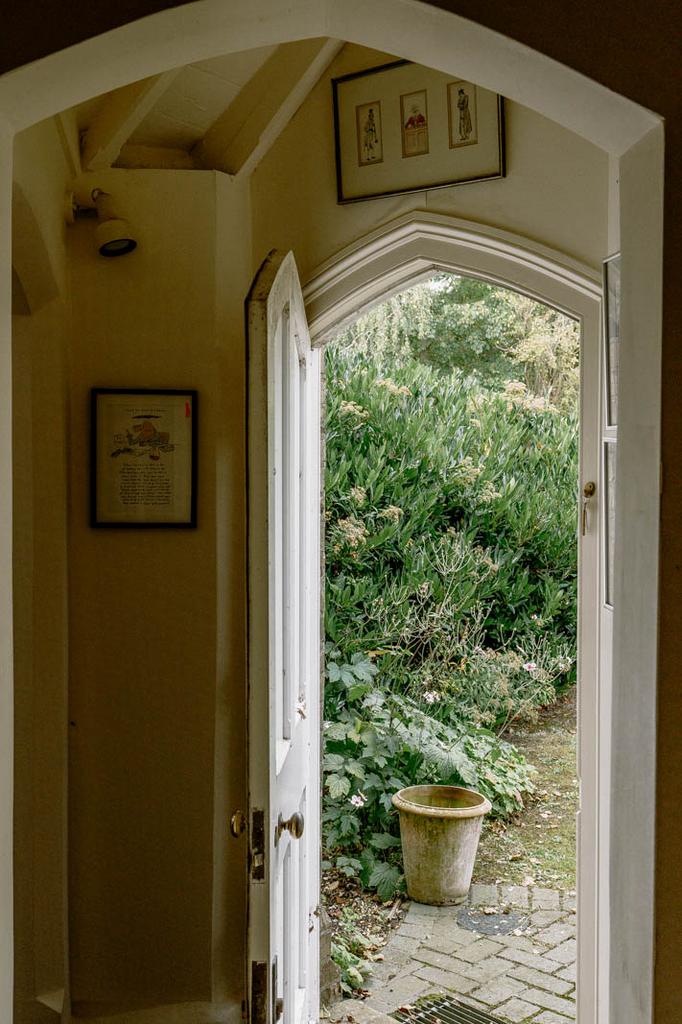
Entry into the house is through the old passenger entrance, below a hood with curved brackets. A door opens into the hallway with the original flagstone floor and, to one side, the original glass ticket window. The ceilings throughout the house's main living spaces are wonderfully high, and still bear the exposed structural iron-work. Set to one side, the kitchen comprises railway red-painted cabinetry set against square-tiled countertops. Behind the kitchen is a useful utility room with additional worktop space, a sink and more storage, perfect for storing crockery.
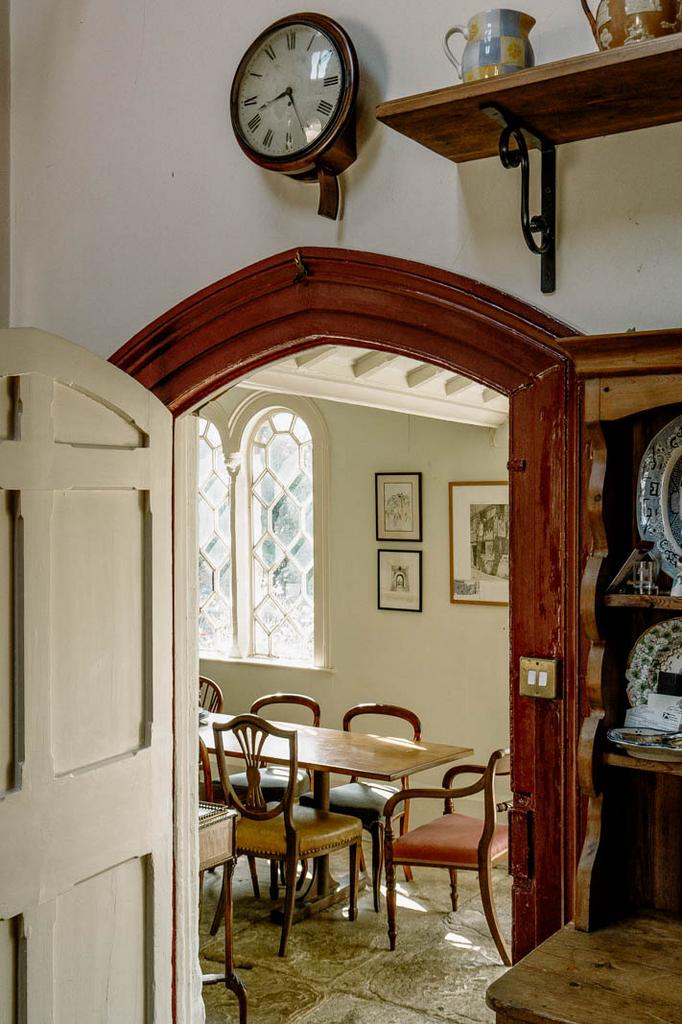
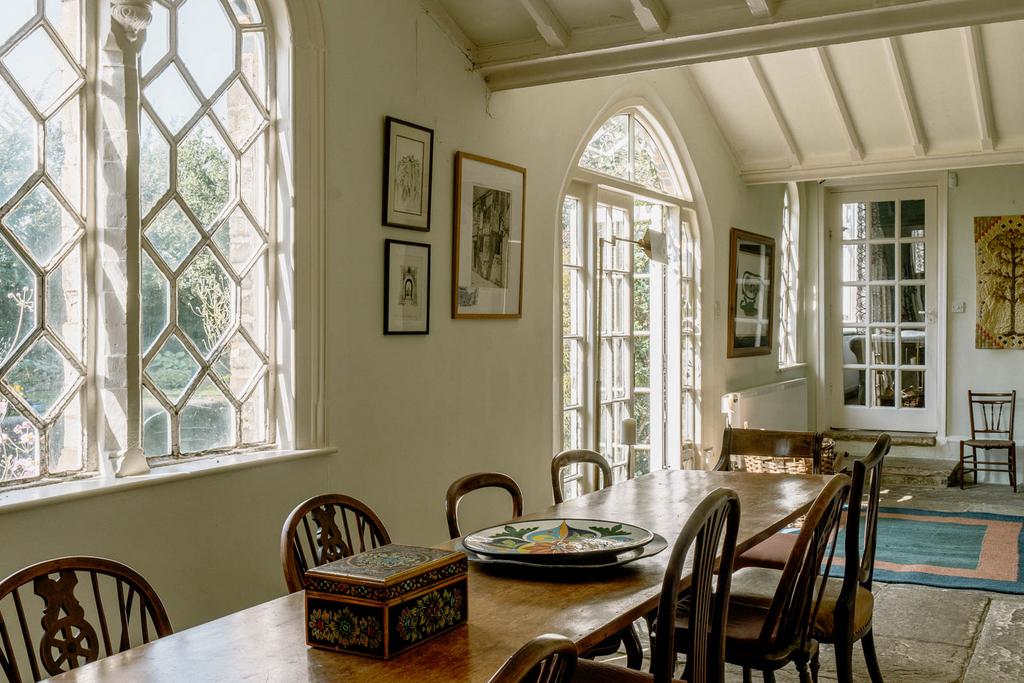
The former waiting room—now a light-filled dining area with French doors that open onto a patio—sits above the original platform. This room has wonderfully high ceilings and is remarkably bright care of the tall, arched windows with their ornamental tracery.
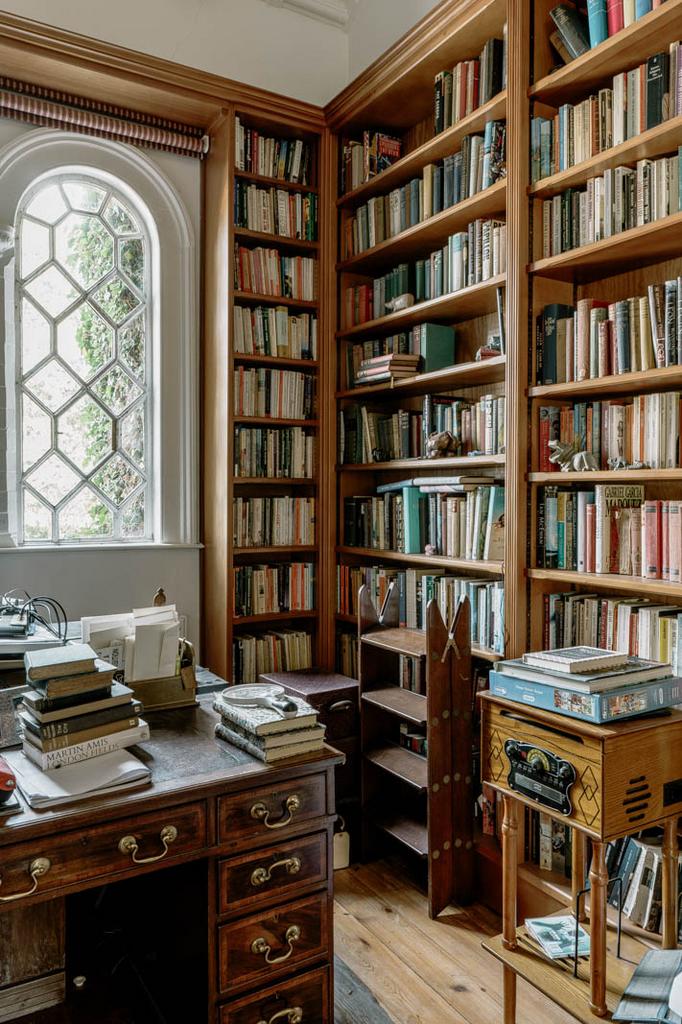
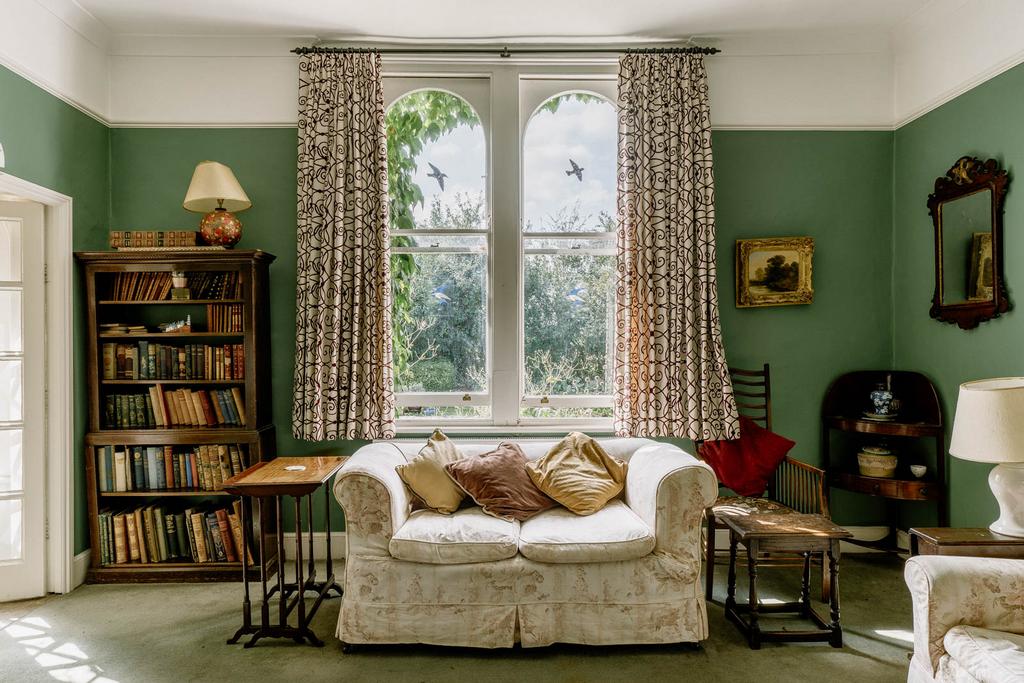
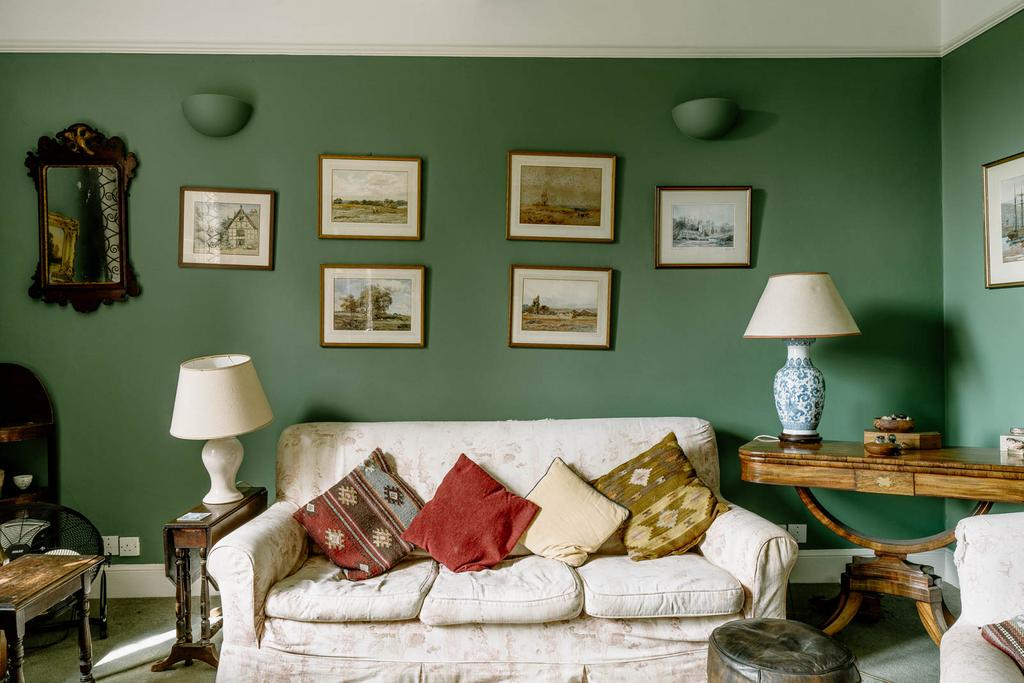
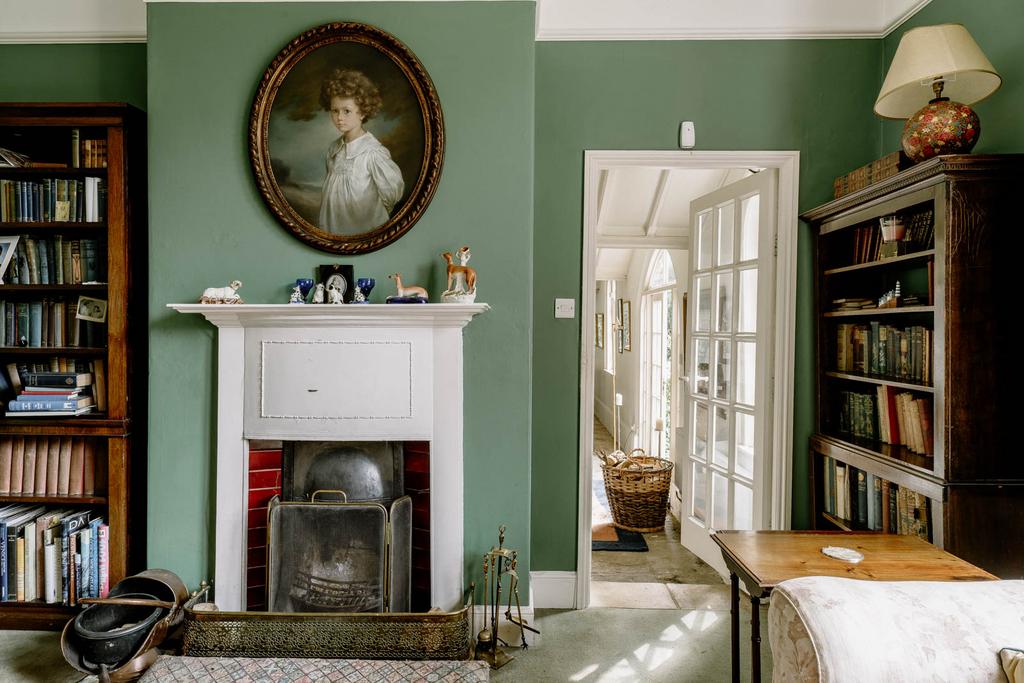
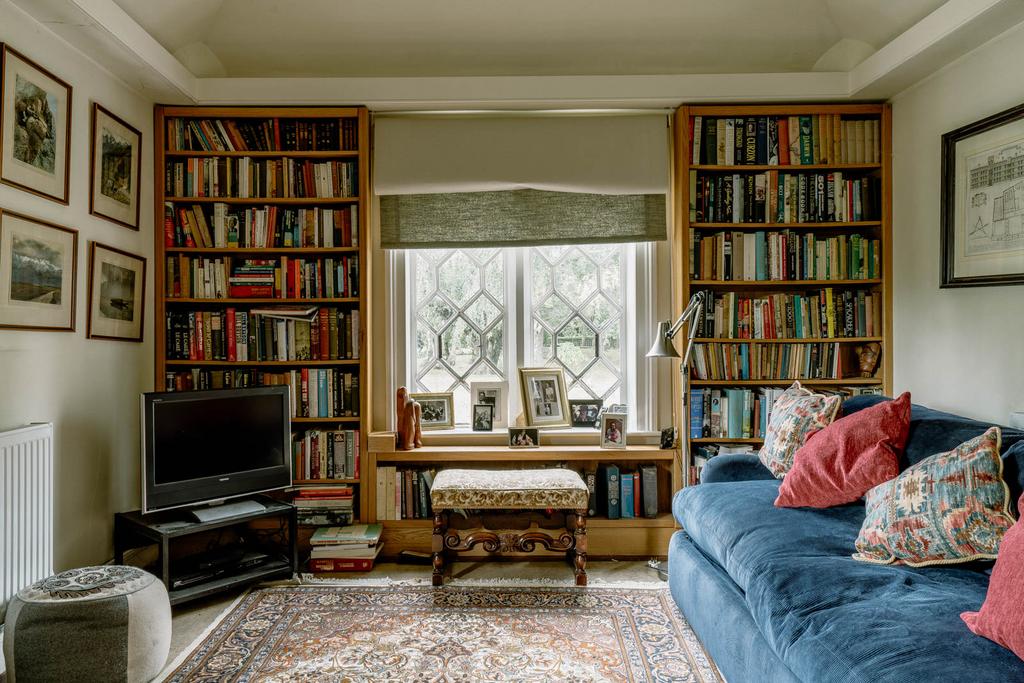
There are two further living spaces on this floor: a cosy, more intimate snug area, and a second sitting room. The former has green-painted walls, a dado rail, and arched sash windows which overlook the platform. An open fire warms the room, with a Victorian surround. The latter has another pretty window, with the same decorative tracery but here additionally framed by wooden bookshelves. This floor is also home to an atmospheric library, with walls lined with floor-to-ceiling bookshelves. There are also two double bedrooms, which share a Jack and Jill shower room. An additional guest WC is found near the second sitting room.
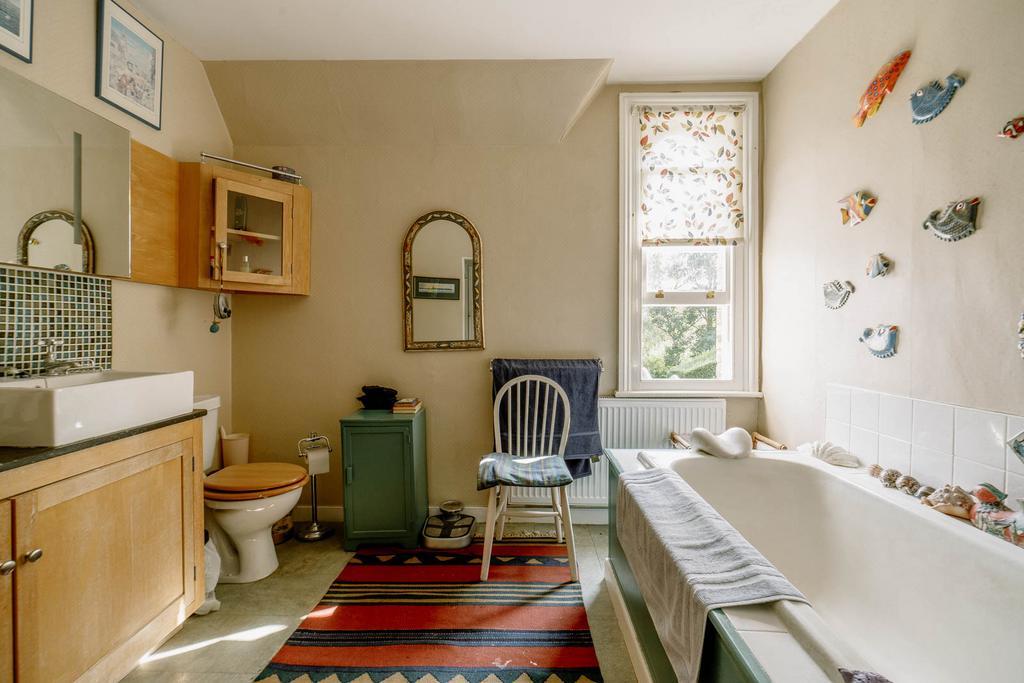
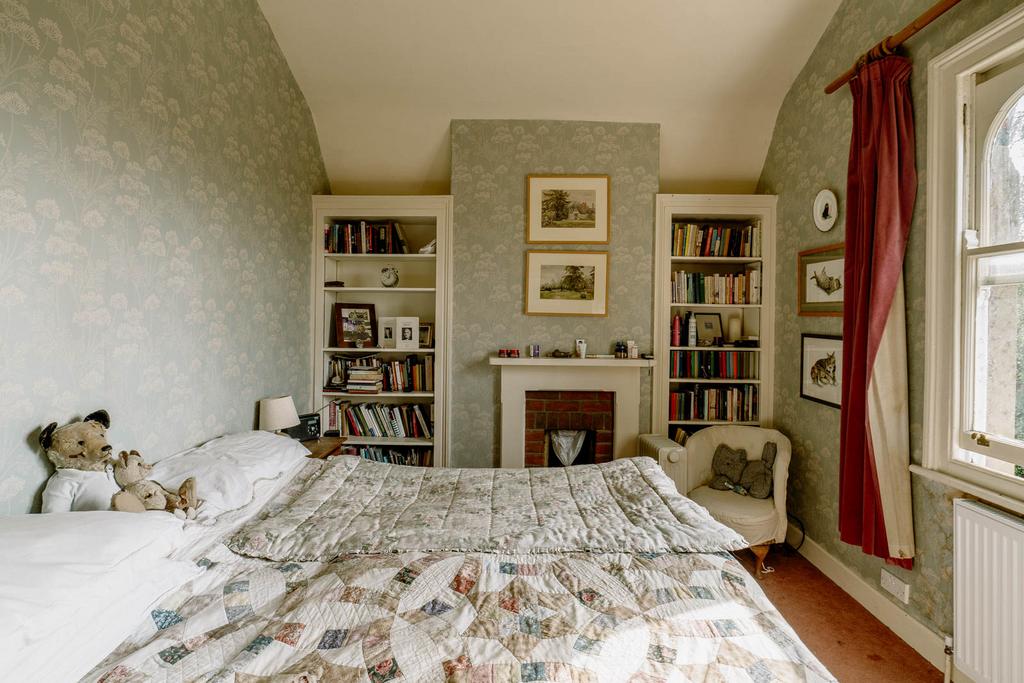
From here, stairs ascend to the second floor where the principal suite is located, comprising a double bedroom with bucolic views over the garden and surrounding fields, as well as a bathroom and generous walk-in wardrobe.
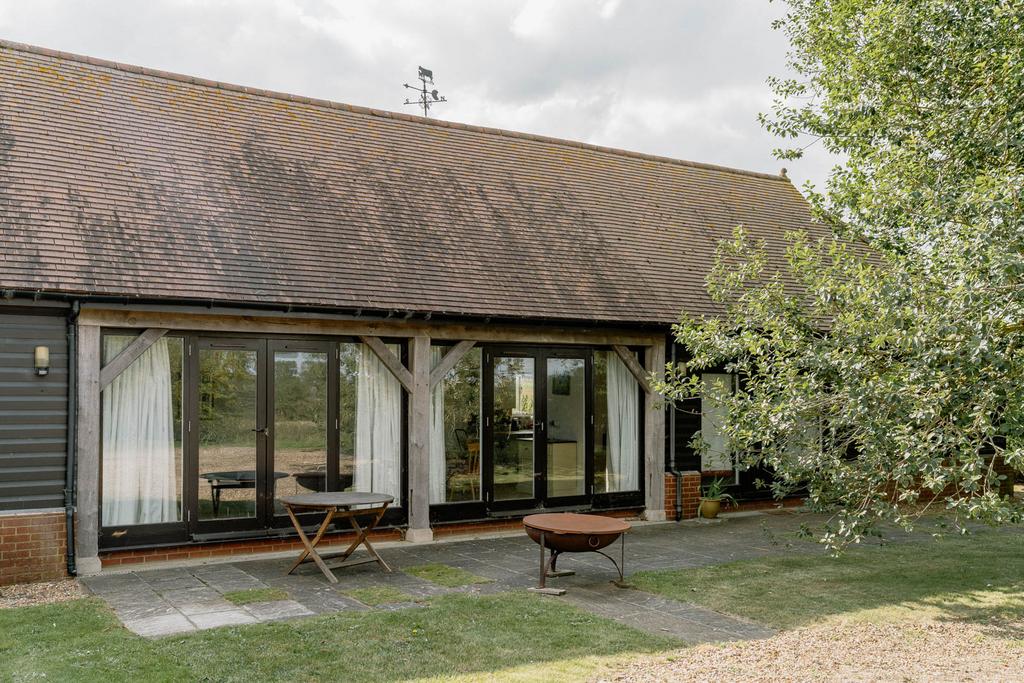
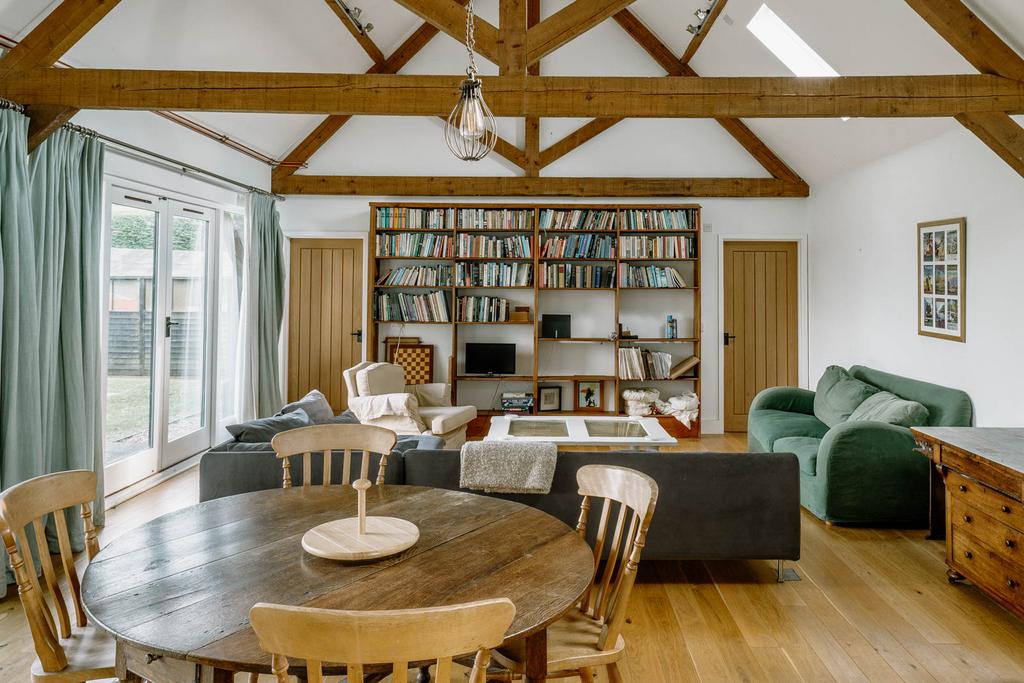
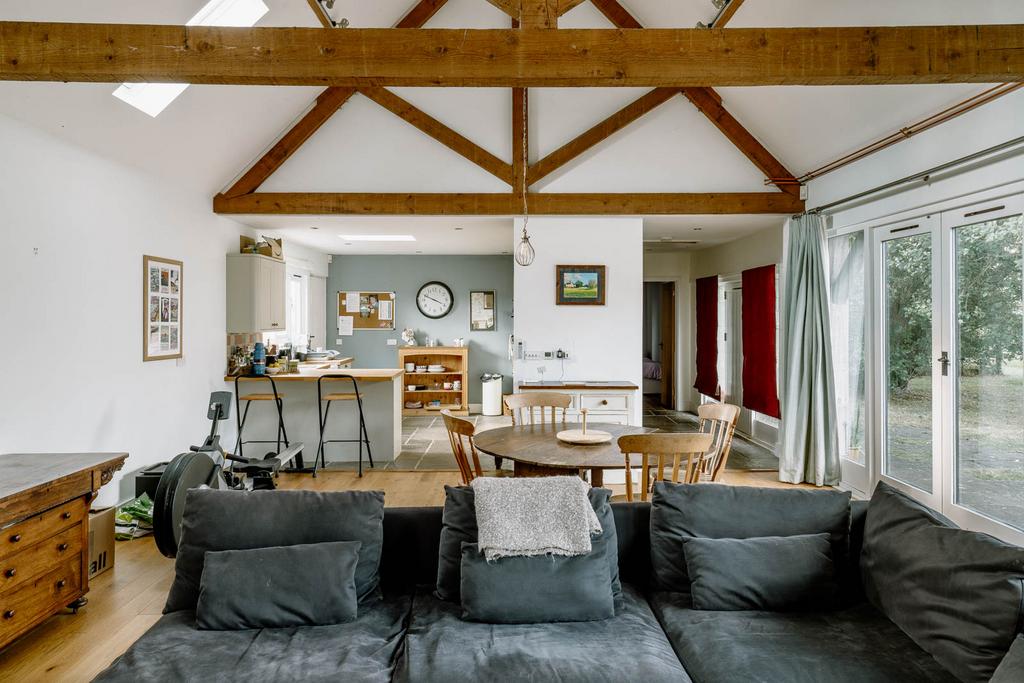
A private annexe is separated from the main house by the tennis court, situated at the end of a short drive with its own parking spaces. This is a large, timber-framed building, with an open plan living, kitchen and dining space. High ceiling heights and exposed beams, along with a wall of tall glazing, ensure that the room is airy and bright. It has two bedrooms at either side of the plan, each with its own en suite bathroom; there is a guest WC too. This could, in its own regard, make for a substantial home.
The Great Outdoors
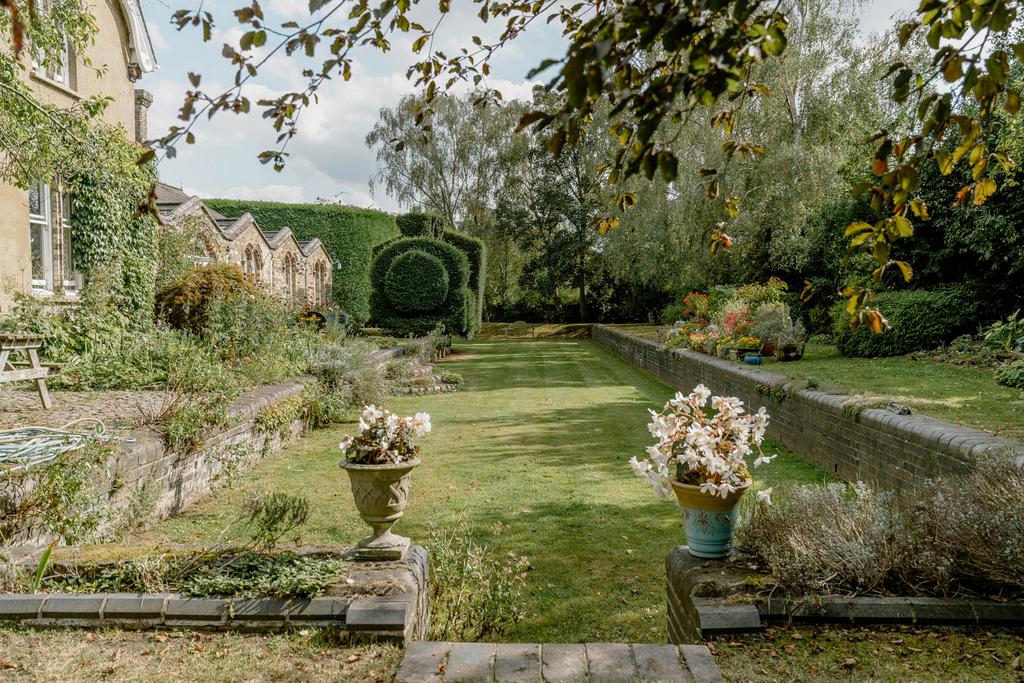
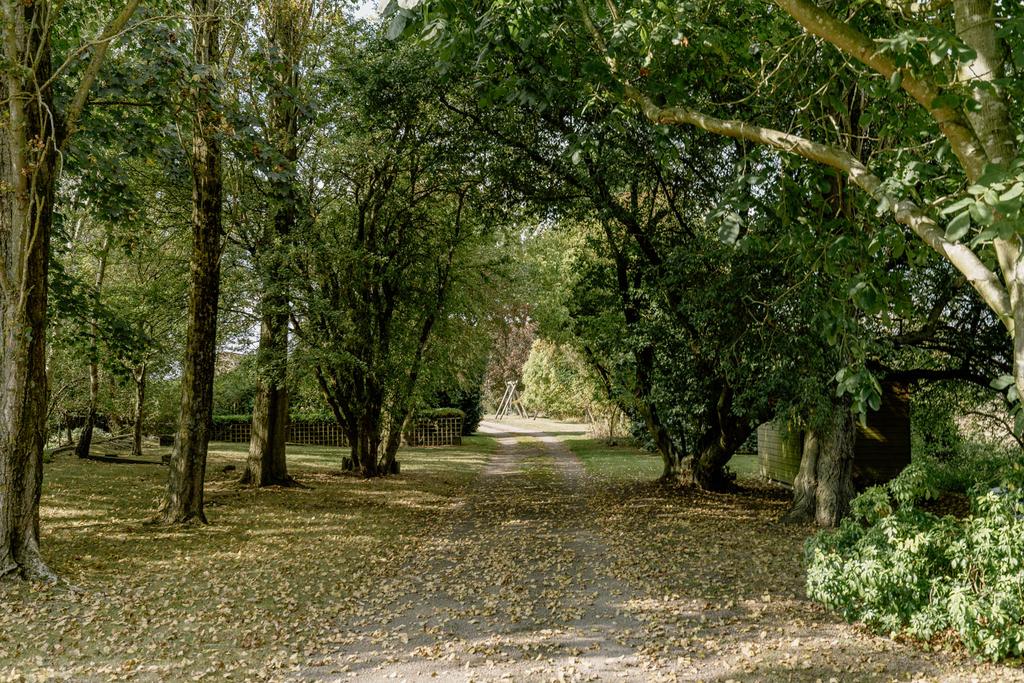
The house is surrounded by an astonishingly beautiful garden. The old platform has been repurposed and laid to lawn across one side, with large flower beds on the other side which hug the length of the house. These are stocked with an abundance of flowers which burst into life during the spring and summer months, from deep red dahlias to bright yellow coneflowers.
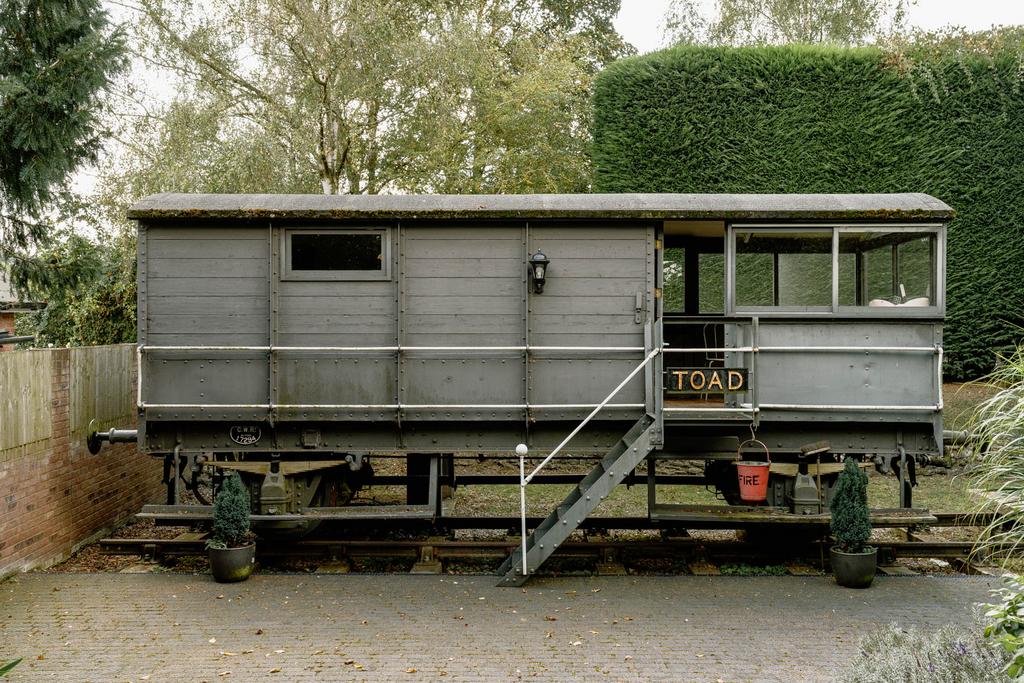
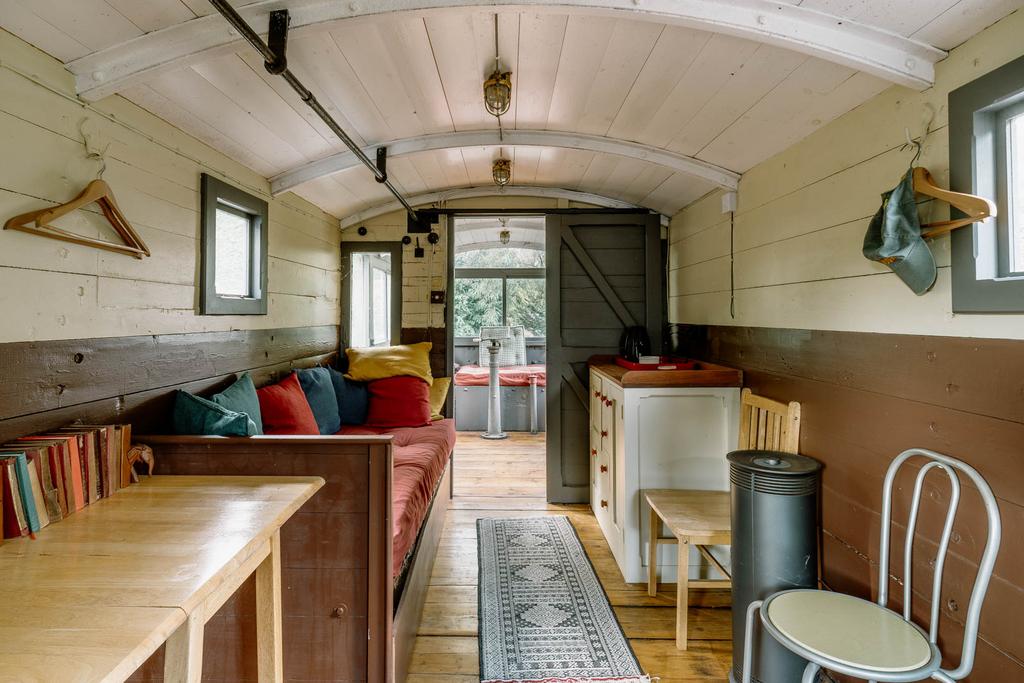
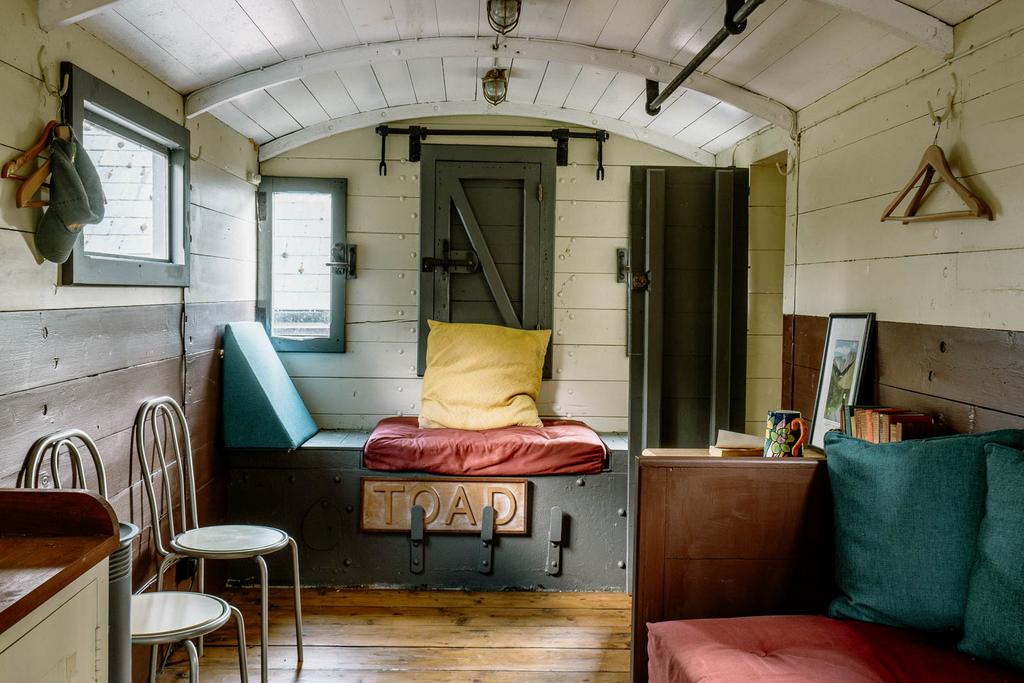
Uniquely, there remains a characterful iron railway toad, clad inside in painted wood. Inside, there is a bathroom and a daybed, making for a space that could also be rented out.
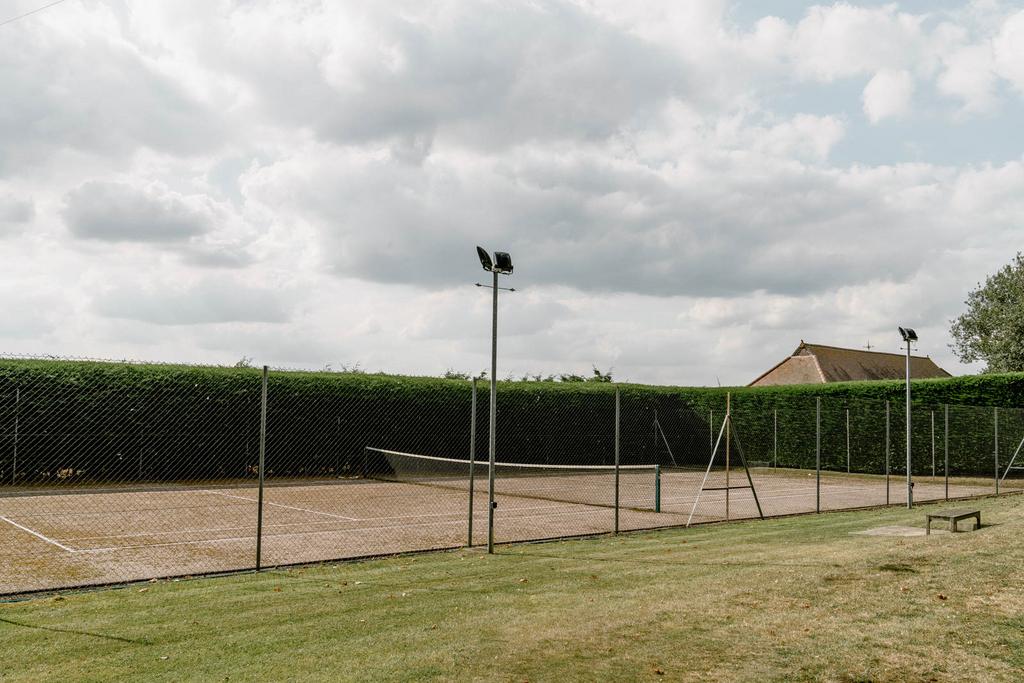
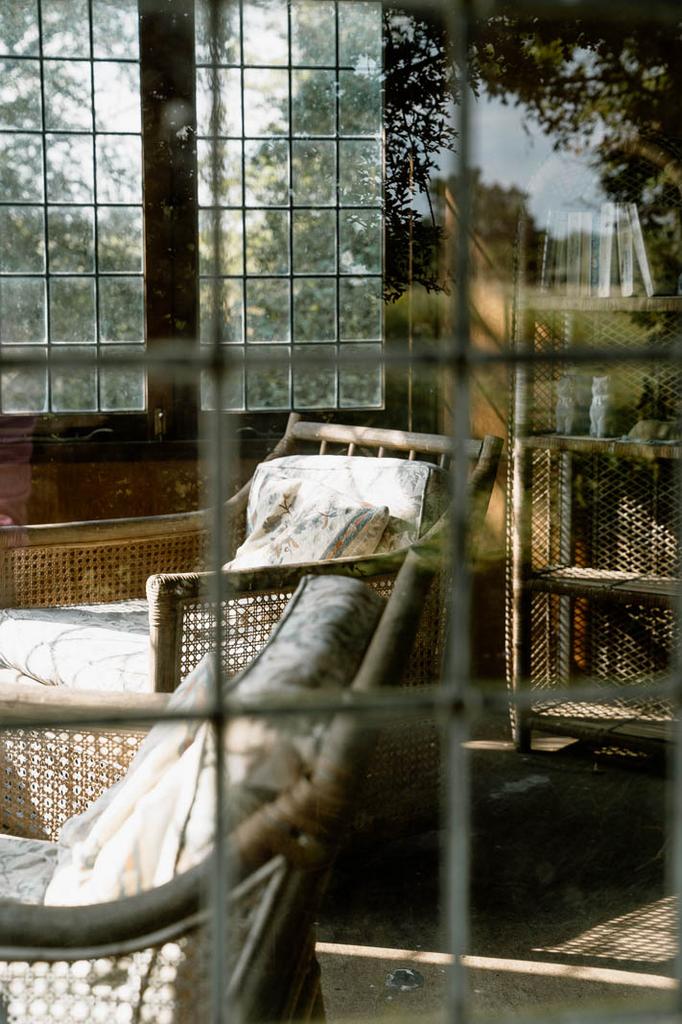
There is also a tennis court, as well as a wildflower meadow surrounded by farmland. A summer house is tucked away among the foliage, the perfect place to sit and read year round.
A further outbuilding, built at the same time as the house, is currently used for storage but could also make a great workshop.
Out and About
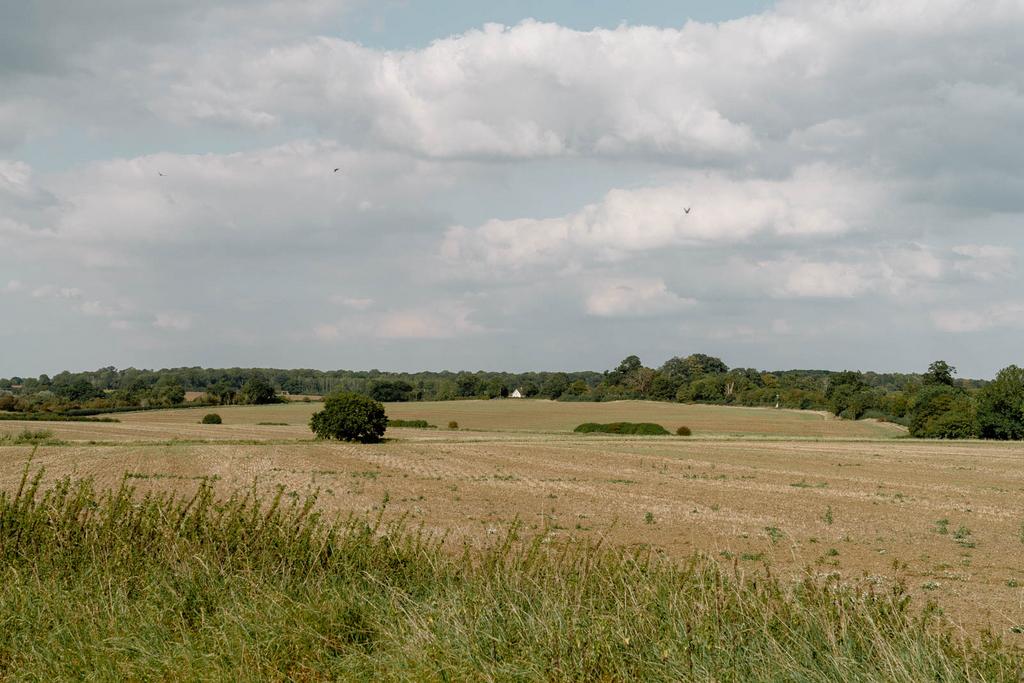
The house is in a pretty position, nestled in Bedford's rolling countryside yet just a short drive away from the centre of Biggleswade, a lovely market town. The village of Southill is a pretty village with a primary school, a pub, The White Horses, and a nice church. There are many other great pubs nearby, including the popular Black Horse which is ten minutes walk from the house.
Hare and Hounds in Old Warden is a pleasant twenty minute walk away, through the Southill (Whitbread) Estate and Park. In fact, the station used to serve the estate, and supposedly the line was used by royalty. Old Warden is an interesting folly village; pretty as a picture, it was used as a location for the 'Winds of War' series in the 1980s, for which they also filmed at the station. The Shuttleworth Collection is also in Old Warden, where they display WWII aircraft and have flying displays in the summer, which can be watched from Station House.
The house is also close to Hitchin, whilst Shefford is the nearest town for local supermarkets, pharmacy, and doctors surgery. There are local cricket matches in Old Warden. Traditional May Day and May Pole celebrations are hosted in nearby Ickwell. There is a fantastic butchers nearby too.
Biggleswade is brilliantly connected, with Thameslink trains to London St Pancras from 36 minutes. The house is also a short drive from the A1 and the A1(M) which connects London to Leeds.
Council Tax Band: G
Setting the Scene
The original station was designed by Charles Driver, a significant British architect of the Victorian period. He pioneered the use of ornamental ironwork, examples of which can be seen in this house's ceiling. The station was built and opened in the mid-1850s and was one of his earliest commissions.
Built with yellow brick, polychrome brick dressings, and slate roofs, the building is handsome with some exceptional original features both inside and out. Most windows are paired with round-headed lights, sitting in cast iron casements with decorative geometric designs. Outside there are also elegant pierced, wavy-edged bargeboards, and a variety of chimney stacks, all with moulded cornices.
Although now in need of modernisation, the work that has been done during its most recent ownership has been sympathetic to the original design. Purchased in 1973, the station was barely habitable until it was thoughtfully converted into a warm and bustling family home. Carefully preserved original features remain: the original glass window to the ticket office remains, now in the bespoke shaker-style kitchen, and the former waiting room now functions as a refined long dining room, with the solid mahogany original ticket counter still in situ. For more information, please see the History section.
The Grand Tour
Entry into the house is through the old passenger entrance, below a hood with curved brackets. A door opens into the hallway with the original flagstone floor and, to one side, the original glass ticket window. The ceilings throughout the house's main living spaces are wonderfully high, and still bear the exposed structural iron-work. Set to one side, the kitchen comprises railway red-painted cabinetry set against square-tiled countertops. Behind the kitchen is a useful utility room with additional worktop space, a sink and more storage, perfect for storing crockery.
The former waiting room—now a light-filled dining area with French doors that open onto a patio—sits above the original platform. This room has wonderfully high ceilings and is remarkably bright care of the tall, arched windows with their ornamental tracery.
There are two further living spaces on this floor: a cosy, more intimate snug area, and a second sitting room. The former has green-painted walls, a dado rail, and arched sash windows which overlook the platform. An open fire warms the room, with a Victorian surround. The latter has another pretty window, with the same decorative tracery but here additionally framed by wooden bookshelves. This floor is also home to an atmospheric library, with walls lined with floor-to-ceiling bookshelves. There are also two double bedrooms, which share a Jack and Jill shower room. An additional guest WC is found near the second sitting room.
From here, stairs ascend to the second floor where the principal suite is located, comprising a double bedroom with bucolic views over the garden and surrounding fields, as well as a bathroom and generous walk-in wardrobe.
A private annexe is separated from the main house by the tennis court, situated at the end of a short drive with its own parking spaces. This is a large, timber-framed building, with an open plan living, kitchen and dining space. High ceiling heights and exposed beams, along with a wall of tall glazing, ensure that the room is airy and bright. It has two bedrooms at either side of the plan, each with its own en suite bathroom; there is a guest WC too. This could, in its own regard, make for a substantial home.
The Great Outdoors
The house is surrounded by an astonishingly beautiful garden. The old platform has been repurposed and laid to lawn across one side, with large flower beds on the other side which hug the length of the house. These are stocked with an abundance of flowers which burst into life during the spring and summer months, from deep red dahlias to bright yellow coneflowers.
Uniquely, there remains a characterful iron railway toad, clad inside in painted wood. Inside, there is a bathroom and a daybed, making for a space that could also be rented out.
There is also a tennis court, as well as a wildflower meadow surrounded by farmland. A summer house is tucked away among the foliage, the perfect place to sit and read year round.
A further outbuilding, built at the same time as the house, is currently used for storage but could also make a great workshop.
Out and About
The house is in a pretty position, nestled in Bedford's rolling countryside yet just a short drive away from the centre of Biggleswade, a lovely market town. The village of Southill is a pretty village with a primary school, a pub, The White Horses, and a nice church. There are many other great pubs nearby, including the popular Black Horse which is ten minutes walk from the house.
Hare and Hounds in Old Warden is a pleasant twenty minute walk away, through the Southill (Whitbread) Estate and Park. In fact, the station used to serve the estate, and supposedly the line was used by royalty. Old Warden is an interesting folly village; pretty as a picture, it was used as a location for the 'Winds of War' series in the 1980s, for which they also filmed at the station. The Shuttleworth Collection is also in Old Warden, where they display WWII aircraft and have flying displays in the summer, which can be watched from Station House.
The house is also close to Hitchin, whilst Shefford is the nearest town for local supermarkets, pharmacy, and doctors surgery. There are local cricket matches in Old Warden. Traditional May Day and May Pole celebrations are hosted in nearby Ickwell. There is a fantastic butchers nearby too.
Biggleswade is brilliantly connected, with Thameslink trains to London St Pancras from 36 minutes. The house is also a short drive from the A1 and the A1(M) which connects London to Leeds.
Council Tax Band: G
About this agent

At Inigo, we believe a beautiful home is a pleasure that never ages. We connect discerning individuals with extraordinary spaces, no matter the price or provenance. Covering urban and rural locations across Britain, our team combines proven experience selling distinctive homes with design and architectural expertise. We unlock the true value of every cottage, coach house, and conversion we represent by telling its story with in-depth features and magazine-quality photography. We take our name from Inigo Jones, the self-taught genius who kick-started a golden age of home design.